
Breaking
C-Shift Sets New Standard for "Aggressive Fire Attack" by Ventilating Neighbor’s House and Parking on Supply Line
A routine suburban "can job" devolves into a masterclass on how to violate every SOP in the book while looking confident doing it.
10 months ago
Chud Johnson News Staff
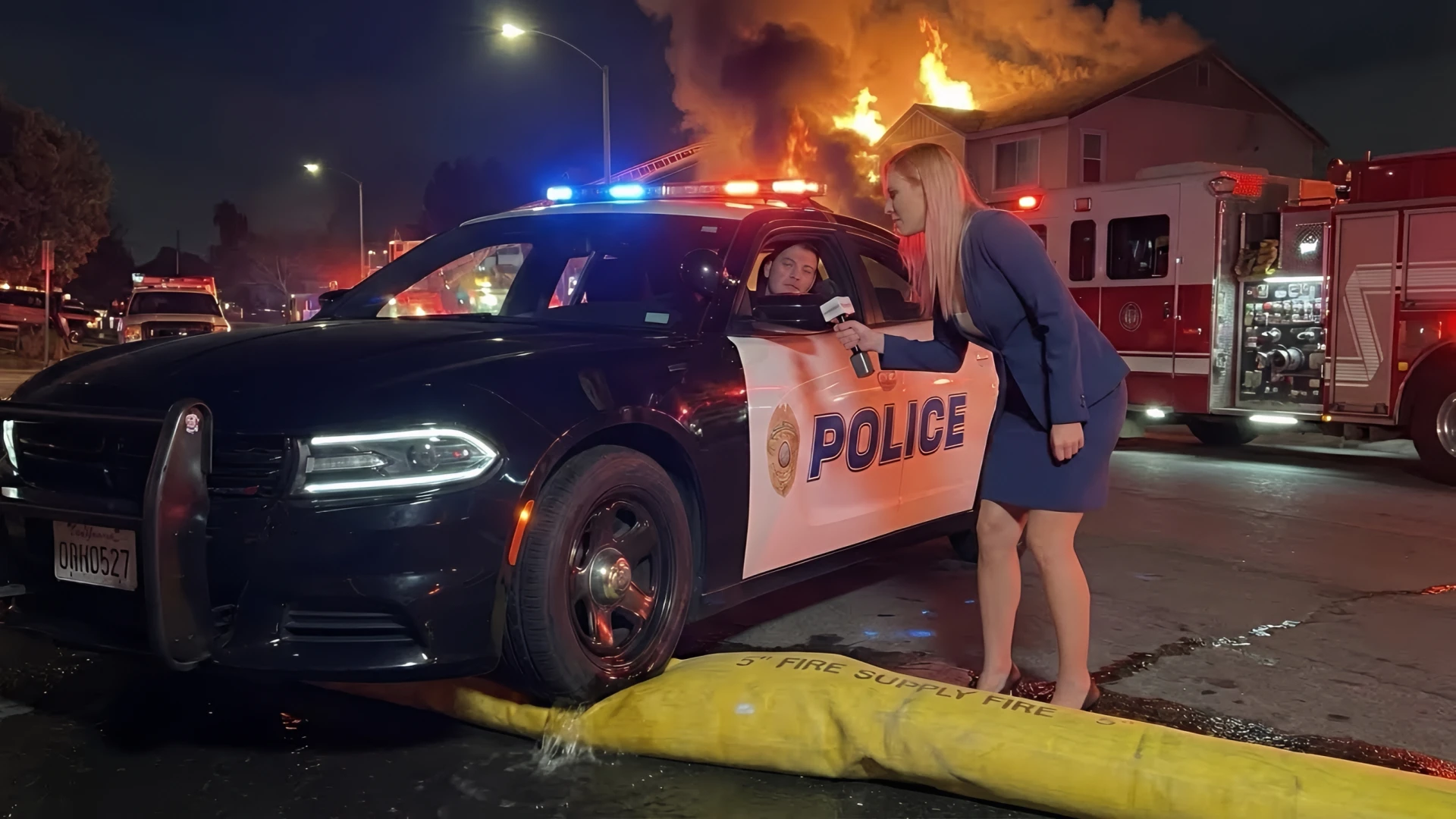
Residents of the Oakwood subdivision were treated to a spectacle of operational "excellence" late last night when a local C-Shift crew turned a routine room-and-contents fire into a multi-agency comedy of errors.
The incident, initially dispatched as a working structure fire, rapidly spiraled into a live demonstration of why we have training manuals. While the fire itself was contained to a single two-story residence, the confusion managed to spread across the entire block.
The "Scenic Route" Strategy
Tactical confusion began the moment the first sirens were heard. Spectators were baffled when the designated Rapid Intervention Team (RIT)—a unit specifically tasked with rescuing downed firefighters—arrived on scene before the suppression engine.
When approached for comment, the RIT members, whose gear remained suspiciously pristine and devoid of soot, admitted that the engine company's driver had "taken the scenic route."
"Look, the bump-up operator missed the turn," one firefighter said, adjusting his spotless helmet. "But honestly? We made good time considering we have no water."
Pre-Ventilating the Neighborhood
The chaos reached new heights—literally—when the Truck Company took to the roof. In a display of aggressive tactics, the crew began cutting a massive ventilation hole to release heat and smoke. Unfortunately, they were performing this textbook maneuver on the house across the street from the fire.
"I woke up to a chainsaw ripping through my shingles," said local homeowner Gary Miller, standing in his bathrobe. "I yelled up to them that the fire was behind them. They just gave me a thumbs up and kept cutting. I guess my attic is breathable now?"
Experts are calling the move a bold new strategy in "proactive exposure protection."
Safety by the Inch
While the operational crews were busy remodeling the wrong home, Command seemed less concerned with the flames and more focused on the geometry of the apparatus placement.
Witnesses spotted a Battalion Chief crouching near the front bumper of Engine 4, ignoring the billowing smoke to meticulously apply a retractable tape measure to the curb distance.
"We have a confirmed violation of Policy 402.1, Section B," the Chief noted, scribbling furiously on a notepad while embers rained down around him. "They are parked 19 inches from the curb. The manual clearly states 18 inches maximum. I don't care if the house burns down, we will not have anarchy in our parking alignments."
The "Hydro-Speed Bump"
To ensure the chaos was an inter-agency effort, the local Police Department contributed to the scene safety by parking a patrol cruiser directly on top of the 5-inch yellow supply hose. The weight of the vehicle caused the pressurized line to bulge comically, spraying water onto the street and effectively choking the water supply to the nozzle team.
When informed that he was parking on the firefighters' lifeline, the officer in the driver's seat appeared unbothered.
"Oh, is that what that is?" the officer said, leaning out the window. "I thought the city installed one of those temporary speed bumps. Whatever, I’m already in park."
The Aftermath
At press time, mutual aid units were heard approaching from the distance, presumably to extinguish the fire, patch the neighbor's roof, and teach the police officer what a fire hose looks like.
"We are back on what should’ve been a can job," Petrina reported from the scene, shaking her head. "But instead, we're watching the smartest guys in the zip code rewrite the book on failure.
The incident, initially dispatched as a working structure fire, rapidly spiraled into a live demonstration of why we have training manuals. While the fire itself was contained to a single two-story residence, the confusion managed to spread across the entire block.
The "Scenic Route" Strategy
Tactical confusion began the moment the first sirens were heard. Spectators were baffled when the designated Rapid Intervention Team (RIT)—a unit specifically tasked with rescuing downed firefighters—arrived on scene before the suppression engine.
When approached for comment, the RIT members, whose gear remained suspiciously pristine and devoid of soot, admitted that the engine company's driver had "taken the scenic route."
"Look, the bump-up operator missed the turn," one firefighter said, adjusting his spotless helmet. "But honestly? We made good time considering we have no water."
Pre-Ventilating the Neighborhood
The chaos reached new heights—literally—when the Truck Company took to the roof. In a display of aggressive tactics, the crew began cutting a massive ventilation hole to release heat and smoke. Unfortunately, they were performing this textbook maneuver on the house across the street from the fire.
"I woke up to a chainsaw ripping through my shingles," said local homeowner Gary Miller, standing in his bathrobe. "I yelled up to them that the fire was behind them. They just gave me a thumbs up and kept cutting. I guess my attic is breathable now?"
Experts are calling the move a bold new strategy in "proactive exposure protection."
Safety by the Inch
While the operational crews were busy remodeling the wrong home, Command seemed less concerned with the flames and more focused on the geometry of the apparatus placement.
Witnesses spotted a Battalion Chief crouching near the front bumper of Engine 4, ignoring the billowing smoke to meticulously apply a retractable tape measure to the curb distance.
"We have a confirmed violation of Policy 402.1, Section B," the Chief noted, scribbling furiously on a notepad while embers rained down around him. "They are parked 19 inches from the curb. The manual clearly states 18 inches maximum. I don't care if the house burns down, we will not have anarchy in our parking alignments."
The "Hydro-Speed Bump"
To ensure the chaos was an inter-agency effort, the local Police Department contributed to the scene safety by parking a patrol cruiser directly on top of the 5-inch yellow supply hose. The weight of the vehicle caused the pressurized line to bulge comically, spraying water onto the street and effectively choking the water supply to the nozzle team.
When informed that he was parking on the firefighters' lifeline, the officer in the driver's seat appeared unbothered.
"Oh, is that what that is?" the officer said, leaning out the window. "I thought the city installed one of those temporary speed bumps. Whatever, I’m already in park."
The Aftermath
At press time, mutual aid units were heard approaching from the distance, presumably to extinguish the fire, patch the neighbor's roof, and teach the police officer what a fire hose looks like.
"We are back on what should’ve been a can job," Petrina reported from the scene, shaking her head. "But instead, we're watching the smartest guys in the zip code rewrite the book on failure.
Disclaimer: This article is satire. All content is fictional and intended for entertainment purposes only. Any resemblance to actual events or persons is purely coincidental and hilarious.