
Opinion
Behind the Scenes: A Day at the CJN Newsroom
Exclusive look at how the "B-Shift of Journalism" produces content.
10 months ago
Chud Johnson News Staff
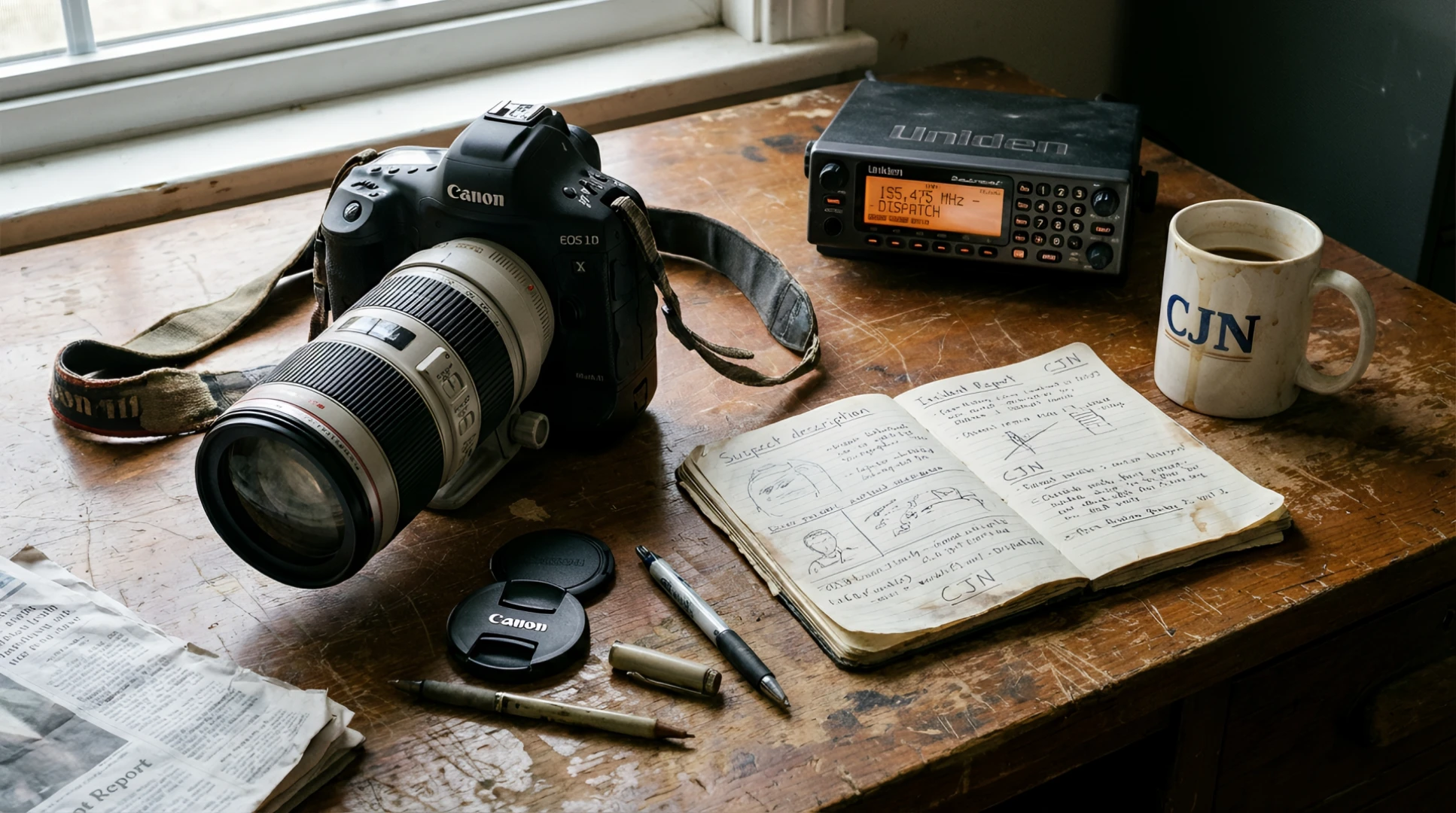
Ever wondered how Chud Johnson News produces its award-adjacent content? We're taking you behind the scenes of our state-of-the-art newsroom (which is mostly just desks we bought at a going-out-of-business sale).
"A typical day starts at around 10 AM," explained executive producer Petrina. "That's when we check the scanner, see what's happening, and decide which emergencies we're most likely to reach without getting stuck in mud."
The newsroom features multiple monitors (one works), a police scanner (also works, sometimes), and a coffee maker that has been described by OSHA as "concerning." Staff includes Chud, Petrina, an intern named Kyle who may or may not still be employed, and a cat that wandered in three months ago and refuses to leave.
"The cat is actually our best employee," Chud noted. "She's never missed a deadline. Mostly because she doesn't have any."
Content decisions are made through a rigorous editorial process that consists mainly of arguing about which stories are "too weird" and "not weird enough." Breaking news is handled by whoever notices the scanner first.
"We like to think we're making a difference," Petrina concluded. "We have no evidence of this, but we like to think it."
"A typical day starts at around 10 AM," explained executive producer Petrina. "That's when we check the scanner, see what's happening, and decide which emergencies we're most likely to reach without getting stuck in mud."
The newsroom features multiple monitors (one works), a police scanner (also works, sometimes), and a coffee maker that has been described by OSHA as "concerning." Staff includes Chud, Petrina, an intern named Kyle who may or may not still be employed, and a cat that wandered in three months ago and refuses to leave.
"The cat is actually our best employee," Chud noted. "She's never missed a deadline. Mostly because she doesn't have any."
Content decisions are made through a rigorous editorial process that consists mainly of arguing about which stories are "too weird" and "not weird enough." Breaking news is handled by whoever notices the scanner first.
"We like to think we're making a difference," Petrina concluded. "We have no evidence of this, but we like to think it."
Disclaimer: This article is satire. All content is fictional and intended for entertainment purposes only. Any resemblance to actual events or persons is purely coincidental and hilarious.